
Flights, ballroom rental, video production, three days of lost selling time, a headline speaker. The sales kickoff is often the single largest line item in the sales enablement budget, and if not designed properly, most of what it buys expires within eight weeks.
I like to call it the February Fade.
Reps leave the event energized, returning to a pipeline that looks exactly the way it did before they boarded the plane. By mid-February, any new messaging, mindset or technique they learned is a PDF nobody opens or refers to, and the quarter is exactly the same as it was last year.
Well-executed SKOs increase sales team motivation and confidence by 11%, according to the Sales Management Association. That’s a real return — but only when the event is built as a launch rather than a celebration.
Unfortunately, most SKO’s are treated as an annual party with a quota slide attached.
Meanwhile, prospects have changed how they research, evaluate, and decide, and the sales process built for a pre-digital sales environment no longer produces the behavior a modern-day buyer demands.
Why Information Overload Kills Behavioral Change in Sales
Ask any Sales VP why sales kickoffs fail, and the answer is rarely “the content was bad.” The content is usually excellent. There’s simply too much of it.
A typical agenda stacks product launches, a competitive update, a pricing change, a new CRM workflow, a methodology refresh, and a culture session into 48-72 hours.
 Every presenter gets a slot, every slot has slides, and every rep leaves with a notebook full of things they can’t prioritize or rank in order of importance. Knowledge retention collapses in this environment. Within weeks, what survives isn’t the strategy — it’s a vague sense that something changed.
The only true measure of an SKO’s effectiveness is what a rep does differently on the first day back at their desk.
That’s the gap leaders underestimate. Knowing a discovery framework and running one under the pressure of a skeptical CFO are different capabilities.
One is information transfer. The other is skill acquisition, and skill acquisition requires repetition, feedback, and correction — none of which happen naturally.
Real SKO behavior change starts by cutting the agenda down to what reps can practice, not what leadership wants to share.
The Failure of ‘Inspiration Without Infrastructure’
Inspiration is perishable. It has a shelf life measured in days, and it expires the moment a rep hits a prospect who won’t return a call. What determines whether the new approach survives that moment isn’t the quality of the keynote — it’s whether any infrastructure exists to hold it in place.
As Drewbie Wilson puts it, a sales kickoff has one job: change what somebody does on Tuesday. Most organizations build nothing to support that.
- The CRM still tracks the same fields it tracked in November.
- One-on-ones still open with “where are we on the number?” instead of “show me how you ran that discovery call.”
- Pipeline reviews reward activity volume while the kickoff preached qualification discipline.
The system quietly contradicts the message.
Front-line sales managers are often at the greatest disadvantage. They attend the same sessions as their reps, receive no separate coaching plan, and return to forecast pressure with no defined reinforcement role.
Without a framework like Unstoppable Sales governing the ninety days after the event, the energy from the stage is a sugar high — real while it lasts, gone without a trace.
Best Practices for a 2026 Sales Kickoff That Sticks
The sales kickoff best practices that matter have less to do with the event and more to do with what surrounds it. Four changes carry most of the weight when building a 2026 sales kickoff agenda that survives the first quarter.
- Cut to zero-fluff content built for digital-first buyers. Every session should map to how prospects actually research and buy today — multi-channel outreach, self-directed evaluation, procurement involvement. If a session doesn’t change how a rep engages a buyer, it shouldn’t be on the agenda.
- Replace passive sessions with live reps. Workshops, role plays, and recorded practice calls produce competence; panels and product decks produce notes. Reps should leave having performed the new skill in front of peers, not having watched someone describe it.
- Name three habits, not thirty priorities. Define the specific behaviors every rep must own by the end of Q1 — a discovery structure, a follow-up cadence, an objection response. Three is enough to coach and small enough to measure.
- Start two weeks early. Send pre-work that frames the problem and gathers rep input so day one begins at application. Arriving cold wastes the most expensive hours of the year.
Bridging the Gap: From Keynote to Daily Habit
A sales kickoff keynote’s job is to open a conversation, shift a mindset, and give a room permission to apply different skills for better results.
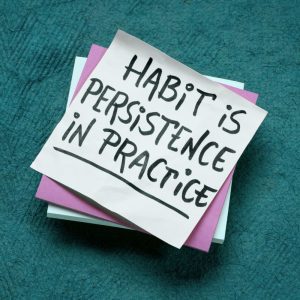 The keynote sets the framework, and customized sales development programs carry it into the field over the following quarters. Off-the-shelf training rarely does this, because it can’t reference the deal that stalled last November, the competitor undercutting on price, or the specific buying committee reps face every week. Customization isn’t polish. It’s what makes the content coachable after the event ends.
The Unstoppable Sales framework exists for that transition: converting kickoff themes into weekly manager cadences, defined practice reps, and pipeline standards that make results predictable rather than seasonal.
Skills alone won’t hold either. Mindset is the variable that determines whether a rep applies a new approach after two rejections or reverts to what felt safe last year. Kickoffs that address both are the ones still influencing behavior in June.
Summary: The Bottom Line for 2026 Planning
For leaders finalizing next year’s event, the planning decisions that matter come down to four points.
- Sales kickoffs fail from lack of reinforcement, not lack of energy. The problem is almost never the production quality or the speaker. It’s the absence of a defined structure that carries new behavior through the ninety days after everyone flies home.
- Behavior change requires converting information into habits. A kickoff should leave reps with a small number of specific actions they can perform under pressure, not a comprehensive download of everything leadership wants them to know.
- The February Fade is preventable with a structured follow-up framework. Aligning manager one-on-ones, CRM fields, and pipeline reviews to the kickoff message turns a three-day event into a full-quarter operating change.
- Effective 2026 kickoffs address modern buyer behavior and rep mindset together. Skills applied with the wrong mindset get abandoned at the first rejection, and mindset without applied skill produces enthusiasm with no mechanism. Both belong on the agenda, and both need reinforcement after it.
Lasting performance isn’t built in a ballroom. It’s built in what survives the return to the daily grind.
Building an Unstoppable Sales Culture
An unstoppable sales team isn’t the product of one great event. It’s the product of a culture where reps expect to practice, managers expect to coach, and the organization measures behavior as seriously as it measures bookings. That culture is built deliberately, over quarters, with a framework holding it together.
The shift most leaders need is simple to state and hard to execute: stop designing a three-day event and start designing a twelve-month strategy that happens to open with three days together. The kickoff becomes the launch point, the reinforcement plan becomes the work, and the results become predictable instead of seasonal.
The best sales kickoff is the one people still reference in December—not because it was memorable, but because the habits it introduced are still producing revenue.
Shawn Casemore delivers professional speaking and sales consulting services, including keynotes, sales kickoff meetings, and customized sales development programs built to keep new behaviors alive long after the event ends. Explore keynote and sales development options to design a 2026 kickoff that holds through the full year.
© Shawn Casemore 2026. All Rights Reserved.
Share This Article
Choose Your Platform: Facebook Twitter Google Plus Linkedin