
Most sales teams aren’t losing because of bad products or weak pricing — they’re losing because they’re still operating with a mindset built for a buying environment that no longer exists.
The old playbook ran on volume and hustle. Make more calls. Send more emails. Push harder at the end of the quarter. In mid-market and enterprise sales, that approach doesn’t just underperform — it actively damages relationships with sophisticated buyers who have already done their research before your rep gets on the phone.
What separates high-performing sales professionals consistently isn’t raw motivation or relentless activity. It’s discipline, mental control, and a structured framework for how they think about every interaction. A true sales mindset isn’t a mood — it’s a repeatable operating system that functions whether market conditions are favorable or brutal.
This gap explains something sales leaders see constantly: unpredictable revenue cycles that no amount of pipeline activity seems to fix. Without a mental framework guiding how reps engage, qualify, and advance opportunities, results become reactive. The pipeline looks full, but the forecast stays unreliable.
That’s precisely why developing a genuine Mind for Sales matters so much right now. As research consistently shows, sustainable sales success comes from daily habits and practical strategies — not bursts of enthusiasm that fade when the quarter gets hard. It’s a strategic asset, not a personality trait.
What that mindset actually requires — and whether your team has it — is exactly what we’ll dig into next.
What It Actually Takes to Have a Mind for Sales
A true sales mindset — what a sales mindset is at its core — isn’t a personality trait you’re born with; it’s a disciplined set of skills, values, and daily habits you build with intention.
That distinction matters enormously for sales leaders in mid-market and enterprise organizations. You can’t recruit your way out of a mindset problem, and you can’t train a team to close deals if the underlying foundation is cracked. The components of a strong sales mindset include knowing you control your own success and maintaining a genuinely optimistic outlook — two things that require active, ongoing reinforcement, not a one-time workshop.
The three skills that separate consistent performers from quota-chasers are empathy, discipline, and strategic questioning. Empathy keeps you buyer-focused, not self-focused. Discipline turns good intentions into daily prospecting habits, structured follow-up, and goals that actually drive forward momentum. Strategic questioning unlocks real buyer intelligence—it replaces assumption-led pitches with conversations that reveal what a prospect actually needs to move forward.
Underneath those skills sit what Shawn Casemore identifies as the 5 C’s: Character, Competence, Confidence, Connection, and Conviction. These aren’t buzzwords. They’re the building blocks of a sales professional who earns trust in complex, high-stakes enterprise sales cycles. When a team is aligned around this common framework, the shift from reactive to predictable revenue becomes measurable.
Passion for helping others succeed holds up under pressure. Commission targets dry up mid-quarter; genuine care for the buyer’s outcome doesn’t. That internal drive is also what sustains rigorous time management — the unglamorous discipline of protecting high-value selling hours, eliminating low-ROI activity, and staying in a high-performance state across a full week.
These are not abstract ideals. They’re the practical inputs that determine whether your team operates with a transactional script or a real competitive edge. Next, we’ll explore the specific rules that govern that edge.
The 7 Golden Rules of Sales for the Modern Leader
To improve sales performance in a sustainable way, modern sales leaders need a structured set of principles — not tactics — that govern how their teams think, prospect, and close.
As the Institute of Sales Professionals notes, “sales starts in the mind,” and cultivating a growth mindset is essential for long-term success. The rules below translate that mindset into daily operating standards your team can actually execute.

- Focus on the buyer’s outcome, not your quota. Quota is a lagging indicator. When your team leads every conversation with the buyer’s goals — not their own targets — trust forms faster and deals close cleaner.
- Integrity in prospecting is non-negotiable. Misleading subject lines, false urgency, and bait-and-switch messaging might generate a meeting; they’ll never generate a relationship. Every prospecting touchpoint should reflect the standard you want buyers to associate with your brand. If you’re still working on breaking through to decision-makers without cutting corners, the approach matters as much as the outcome.
- Consistency beats intensity every time. One blitz week followed by three quiet ones creates exactly the unpredictable pipeline you’re trying to eliminate. Steady, repeatable outreach compounds over time in ways that sporadic intensity never will.
- Stay top-of-mind by providing value, not just ‘checking in’. “Checking in” is noise. Sharing a relevant insight, a market observation, or a resource that solves a specific problem — that’s a reason to respond.
- Build resilience into your process, not just your attitude. Rejection is structural, not personal. Teams that debrief lost deals systematically recover faster and win more frequently than those that simply “shake it off.”
- Commit to continuous learning. The buyer has changed. The channels have changed. The competitive landscape has changed. A mind for sales demands ongoing investment in new skills, frameworks, and knowledge — not a one-time training event.
- Take full ownership of your results. Blame — the economy, the leads, the pricing — is a dead end. Ownership is what separates producers from performers.
These seven rules aren’t aspirational posters for the break room. They’re the operating code of a sales team that runs on discipline, not inspiration. And discipline, as you’ll see in the next section, lives entirely in your daily habits.
Daily Habits: The Engine of Unstoppable Sales
Sales motivation isn’t a spark you wait for — it’s a discipline you build through daily habits that compound over time into predictable, repeatable revenue.
A mindset without structure is just intention. What separates high performers from everyone else isn’t raw talent or a bigger territory — it’s how they spend the first 60 minutes of their day and how ruthlessly they protect their selling time from administrative creep. Calendar reviews, internal meetings, and inbox management can consume hours that should be generating pipeline. If you’re not actively defending your selling time, you’re quietly surrendering it.
The 2-2-2 rule offers a practical reset. Each day, commit to two new outreach attempts, two follow-ups on existing opportunities, and two value-add touches with current customers or warm prospects. It’s a simple framework, but in practice it creates the kind of consistent activity that eliminates the feast-or-famine cycle that plagues so many sales teams. Discipline applied daily beats intensity applied sporadically. occasionally — every time.
For executives and sales leaders who want to sharpen their thinking without adding hours to an already packed schedule, the audiobook format of A Mind for Sales is worth noting. At just under five hours of total runtime, it fits into a commute, a workout, or a travel day — making it one of the more efficient ways to absorb a full framework on daily habits and practical sales strategy.
Another often-overlooked habit is balancing digital-first behaviour with traditional relationship building. Buyers research, self-qualify, and shortlist before they ever contact a seller—so your digital presence and outreach need to meet them where they are. But that doesn’t replace the phone call, the in-person meeting, or the handwritten follow-up that makes you memorable. The Unstoppable Sales™ framework is built around this intersection: use digital channels to open doors, then use authentic human connection to walk through them.
Knowing how to stay top-of-mind once you’ve made that first connection is where the real discipline kicks in — and that’s exactly what we’ll tackle next.
Staying Top-of-Mind in a Crowded Market
The biggest mistake sales professionals make after an initial meeting isn’t a bad pitch — it’s defaulting to the hollow “just checking in” follow-up that signals you have nothing new to offer.
In manufacturing, energy, and enterprise retail, buyers are managing complex priorities. They don’t have bandwidth for low-value contact. What earns their attention is insight-led follow-up — a relevant article, a specific observation about their business challenge, or a data point that reframes the problem they’re trying to solve. That’s how you stay top of mind without becoming noise.
Insight-led follow-up is a direct output of the Unstoppable Sales™ framework. When you use disciplined discovery early in the sales cycle to identify a prospect’s real pain points — not just their stated needs — you build a foundation that fuels every subsequent touchpoint. You know what keeps them up at night, which means your follow-up actually means something. A Mind for Sales — whether you consume it in print or as an audiobook during your commute — reinforces this principle across 240 pages of practical strategies built around modern buyer behaviour.
Ghosting happens when prospects feel no compelling reason to re-engage. A disciplined mindset closes that gap. When you’re consistent—when every outreach delivers value rather than asking for a status update—you become the sales professional a buyer actually wants to hear from. And on the question of automation: use it to stay organized, not to replace the human connection that ultimately wins the deal. The right balance is automation handling the logistics while you focus on the conversations only a human can have. That balance, built on the right habits and principles, is what sets the stage for a sustainable sales culture — which is exactly what we’ll address next.
The Bottom Line: Transforming Your Sales Culture
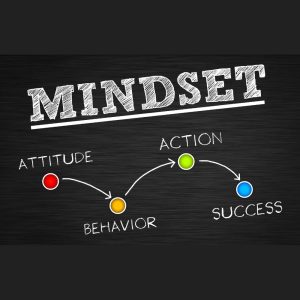 Mindset isn’t one ingredient in your sales performance — it’s the foundation everything else is built on, and without it, even the best tactics collapse under pressure.
In practice, the sales professionals who consistently hit their numbers aren’t the ones with the slickest pitch. They’re the ones who show up every day with structured habits, a commitment to learning, and frameworks that create predictability where most teams experience chaos. That’s what a true mind for sales looks like in action.
The daily disciplines covered earlier — like the 2-2-2 rule — aren’t motivational fluff. They’re the operational engine that converts mindset into revenue. Pair those habits with guardrails like the 5 C’s and the 7 golden rules of sales, which emphasize prospecting with integrity and building trust at every touchpoint, and you have a system that removes guesswork from the pipeline.
Continuous learning is the thread that holds all of it together. Audiobooks, leadership reads, and structured sales development programs aren’t perks — they’re professional requirements for anyone serious about staying relevant in a market where buyers are more informed and more skeptical than ever. When you evaluate the frameworks and speakers your team learns from, the right evaluation criteria matter as much as the content itself.
Building an unstoppable sales culture requires more than inspiration. It requires the right environment — one designed to reinforce these principles consistently, at every level of your organization.
Building an Unstoppable Sales Environment
The shift from transactional selling to a true mindset for sales isn’t a technique upgrade — it’s a complete reset of how your team thinks, engages, and wins.
Every section of this article has pointed to the same conclusion: tactics without the right mindset produce inconsistent results. You can script the perfect follow-up, optimize your discovery questions, and invest in the latest CRM — but if your team still defaults to transactional habits under pressure, none of it sticks. Old patterns are stubborn because they’re familiar, and familiarity feels comfortable even when it costs you revenue.
That’s why external expertise accelerates what internal coaching alone cannot. A fresh perspective—delivered through a high-energy keynote or a customized sales development program—breaks the cycle of habitual thinking in a way internal training rarely does. It creates a moment of genuine disruption that shifts how your team sees their role, their buyers, and their own potential.
The Unstoppable Sales™ framework is built precisely for that moment. It combines 30 years of real-world sales experience with zero-fluff strategies your team can apply immediately — moving your organization away from unpredictable cycles and toward predictable, high-performing revenue growth.
If you’re planning a sales kickoff or looking for a customized training program that produces lasting change, explore how Shawn Casemore’s professional speaking and sales consulting services can build the environment your team needs to compete and win. Reach out to Shawn Casemore to start that conversation today.
© Shawn Casemore 2026. All Rights Reserved.
Share This Article
Choose Your Platform: Facebook Twitter Google Plus Linkedin